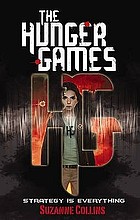
 The Hunger Games
 by Suzanne Collins. Scholastic, 2008. 374p. (9780439023528)
The Hunger Games. Most everyone has heard of it. Many have strong opinions about it. Some have seen the movie. Some refuse to see the movie. Why has it created such a debate?
That’s simple. Because it tells the story of a girl in a society that allows twenty four of its children to be placed in an arena where they must fight to the death.
Just a friendly warning, this post is much longer than what I usually write. And I promise to do my best not to include any spoilers. I really didn’t know much about the story before reading it. I saw the trailer for the movie, read
World Magazine’s review of the movie and read few if any reviews of the book.
A friend wanted my opinion on the book otherwise I’m not sure if I would have read it. Maybe I would have. But then I’ve never read any Harry Potter…
At the beginning, the reaping – which is when the participants or the tributes as they are called are chosen for the Hunger Games, reminded me of the USSR and other communist countries which take young kids who show athletic prowess and place them in special training schools. Honor, riches and fame await them if they win. But in the HG, the kids won’t go back home alive if they fail.
I don’t quite know why, but it’s disturbing to read about a controlling government reigning over what once was America and Canada. Panem (Pan Am…?) is the new nation – one shining Capitol and twelve Districts surrounding it. There were thirteen originally, but District Thirteen was obliterated after a rebellious uprising that all the Districts participated in.
Which is why the Hunger Games were created. As a reminder “that the Dark Days [the uprising of the Districts] must never be repeated.” (pg. 18) There have been 74 Hunger Games. Seventy-four times one boy and one girl from each district has been chosen to participate in the game – a game where there is one victor and 23 victims. That’s 1702 children ages 12-18 who have died.
Taking kids from our districts, forcing them to kill one another while we watch – this is the Capitol’s way of reminding us how totally we are at their mercy. How little chance we would stand of surviving another rebellion. Whatever words they use, the real message is clear. “Look how we take your children and sacrifice them and there’s nothing you can do. If you lift a finger, we will destroy every last one of you. Just as we did in District Thirteen.”
To make it humiliating as well as torturous, the Capitol requires us to treat the Hunger Games as a festivity, a sporting event pitting every district against the others. (pg. 18-19)
The reading level of the above quote is 8
th grade according to the Flesch-Kincaid Grade Level test that Microsoft Word can do.
Scholastic says this book’s interest level is 6
th – 8
th grade, it has a grade level equivalent of 5.3 and a Lexile® measure of 810L – which means 4
th graders would be able to read and comprehend this book.
Sorry for all the numbers, I did my master’s thesis on the readability of the Newbery Award winners and find this interesting. Now I know those numbers and tests only measure how easy a text is and thus what grade a child probably will be in when he/she is a proficient enough reader to understand the text. It doesn’t measure how suitable a story is for the reader.
Whatever happened to the children and youth stories such as Tom Sawyer, Little Women, Peter Rabbit, Treasure Island, Smokey the Cow Horse, Black Beauty, Johnny Tremain, Carry On Mr. Bowditch, etc.? When did children’s literature or young adult lit turn toward tales where teens kill other teens? And that said murder is sanctioned and encouraged?
But then again, how is the Hunger Game any different from any war stories, cowboy and Indian tales, or pirate adventures? In those adventures someone usually had to kill to survive. The guard’s throat is slit so the prisoner(s) can escape, a bandit after the gold is going to kill someone if he isn’t taken care of first, and the cabin boy kidnapped by pirates had better participate in the next raid if he doesn’t want to become a shark’s dinner.
There is a difference. In those cases the deaths were not sanctioned and encouraged, the setting was not created and manipulated by the governing forces – the deaths in the above scenarios were (unfortunately) from self-preservation and “necessity.”
But wait you cry. In the HG arena it’s also out of self-preservation and necessity. Well, yes and no. If it weren’t for the existence of the HG twenty three children would keep their life each year. The event is a display of power and control. A show to keep the people cowering in fear and toeing the line to the regime.
Fortunately the deaths (prior to page 194 and a bit beyond) are all “off page” except for one and the reader doesn’t really know those kids. Later of course it’s inevitable that the reader knows some of them more and “witness” when they die.
The story does grab your attention and makes you ask ‘what is going to happen next?’ and ‘how is she going to survive?’. I’ve heard some people say the story affirms the value of life in that (I’m guessing) the main character cared for individuals and didn’t really want to kill anyone. Mmmm, perhaps, but there are better ways to tell a story that affirms the value of life.
This story reminds me of those books in high school that you had to read, discuss, dissect and evaluate. Books like The Scarlet Letter or Catcher in the Rye or The Lord of the Flies. I’ve only read the first one of those three and didn’t like it – both the story and having to find the deeper themes.
The Hunger Games is a book to be thought about, not something to be read lightly. Only read it if you want to know what everyone is talking about, it’s not a “great” (eminent, distinguished; markedly superior in character or quality –
Merriam-Webster) book, but it’s interesting.
Disclosure: I borrowed this book from the library. The opinions I have expressed are my own. I am disclosing this in accordance with the Federal Trade Commission.